
Environment
Climate Change: How Science Explains the Intensification of Extreme Weather Events

On this page
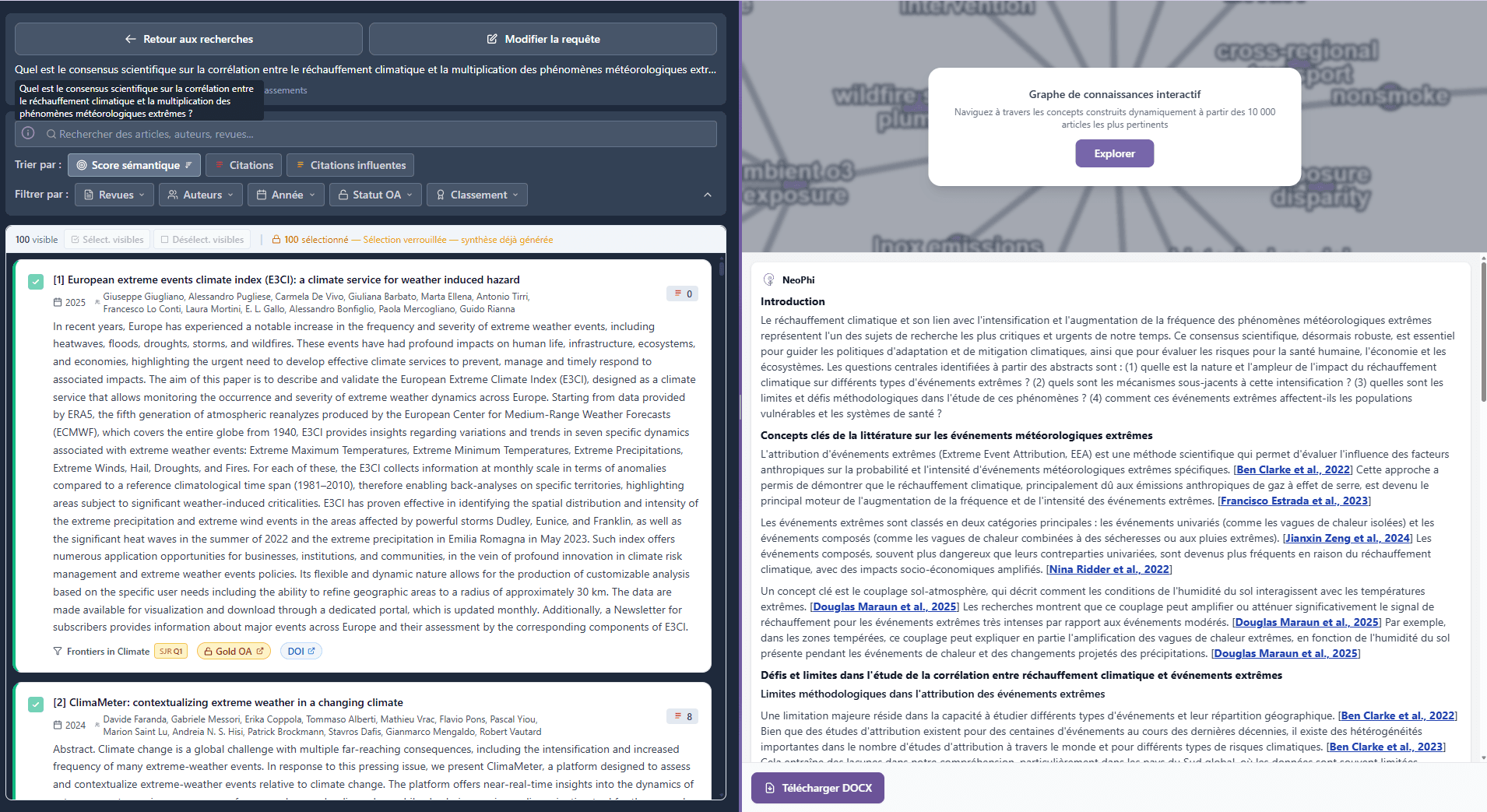
Based on an article by S. Monturet, European Projects Consultant at F.initiatives and PhD in Physical Sciences from the University of Toulouse (Paul Sabatier)
The recent increase in the frequency and intensity of floods, heatwaves, storms and heavy rainfall constitutes one of the most robust indicators of anthropogenic climate change. Heatwaves, extreme precipitation, prolonged droughts, and severe storms can no longer be understood as isolated expressions of natural variability, but rather as manifestations of a climate system whose thermodynamic and radiative equilibria have been significantly altered by greenhouse gas emissions.
Recent scientific literature, particularly based on event attribution approaches, converges toward a clear consensus: climate change is significantly amplifying extreme events in both frequency and intensity (Clarke et al., 2022; Estrada et al., 2023). This consensus is grounded in successive IPCC assessment reports, which document long‑term changes affecting environmental systems worldwide. In this context, NeoPhi supports environmental stakeholders by decoding scientific evidence from IPCC reports and translating climate research into actionable insights for France and beyond.
The Intensification of Climate Hazards: A Well-Established Scientific Consensus
The intensification of climate extremes is supported by well-understood physical mechanisms. The increase in global mean temperature enhances the atmosphere’s capacity to retain water vapor, in accordance with the Clausius–Clapeyron relationship, thereby intensifying extreme precipitation events. In France, these physical mechanisms contribute to heavier rainfall in the north and west of the country, increasing the likelihood of floods and river overflows.
At the same time, warming alters atmospheric circulation patterns, increasing the likelihood of blocking situations that lead to persistent and severe heatwaves.
Estrada et al. (2023)) demonstrate that anthropogenic influence has become a dominant driver of emerging global “hotspots” of extreme climate risk.
Univariate and Compound Events
A key distinction is made between univariate events, which involve a single climatic hazard, and compound events, which arise from the interaction of multiple drivers.
Compound events—such as concurrent heatwaves and droughts—are particularly critical due to their amplified impacts. Their frequency is increasing significantly under warming conditions (Zeng et al., 2024; Ridder et al., 2022). Such compound events are already observed in several European countries, particularly in France, during episodes combining heavy rainfall, rapid river flooding and storms.
These events are often governed by feedback mechanisms that simultaneously intensify multiple climatic variables, thereby increasing both their severity and their systemic impacts.
Causal analysis of climate events and land–atmosphere coupling mechanisms
Extreme Event Attribution: Quantifying Anthropogenic Influence
Extreme Event Attribution (EEA) represents a major methodological advancement in climate science. It relies on counterfactual climate simulations comparing:
- a present-day climate influenced by anthropogenic emissions
- a hypothetical climate without human influence
This approach allows for the quantification of changes in the probability and intensity of specific events. Clarke et al. (2022) show that many recent extreme events exhibit a statistically significant anthropogenic signal.
However, Clarke et al. (2023) emphasize that attribution results remain sensitive to methodological choices, particularly regarding the definition of extreme thresholds.
Land–Atmosphere Coupling and Climate Feedbacks
Land–atmosphere coupling plays a critical role in amplifying thermal extremes.
When soil moisture decreases, evapotranspiration is reduced, leading to a decline in latent heat flux and a corresponding increase in surface temperatures. This mechanism generates a positive feedback loop that intensifies heat extremes.
Maraun et al. (2025) demonstrate that such interactions can lead to heatwave intensification beyond what is predicted by conventional climate models.
This process is especially relevant in temperate and semi-arid regions, where soil moisture conditions become a key determinant of extreme temperature dynamics.
Methodological Challenges and Uncertainties in Climate Projections
Heterogeneity in Attribution Methodologies
Attribution studies rely on methodological choices that can significantly influence outcomes, including the definition of extreme events, the selection of reference periods, and the choice of climate indicators.
Clarke et al. (2023) show that these variations can lead to substantial differences in estimating anthropogenic influence.
Furthermore, Brunner et al. (2024) identify biases related to the definition of extreme thresholds, which may result in underestimations of the true frequency of extreme events.
Uncertainties in Climate Models
Climate projections rely on[ Global Climate Models (GCMs) and Regional Climate Models (RCMs)](https://probablefutures.org/fr/science/climate-models/ ), which simulate interactions between the atmosphere, oceans, land surfaces, and the biosphere. Despite continuous improvements, uncertainties remain due to differences in physical parameterizations, spatial resolution, and the emission scenarios used.
These divergences directly affect the representation of climate extremes and regional impacts. Compound events, in particular, remain difficult to simulate, as they involve complex, multi‑scale and non‑linear interactions between several climate drivers, which are not always fully captured by current modeling frameworks (Yao et al., 2024).
Data Gaps and Regional Disparities
Climate analyses are strongly dependent on data availability. In many regions of the Global South, observational records remain sparse or incomplete, limiting both the robustness of attribution studies and the accuracy of regional projections.
Otto et al. (2023) highlight that these data gaps represent a major constraint in the global understanding of climate risks. They particularly limit fine‑scale analysis of weather risks, especially those related to heavy rainfall and storms.
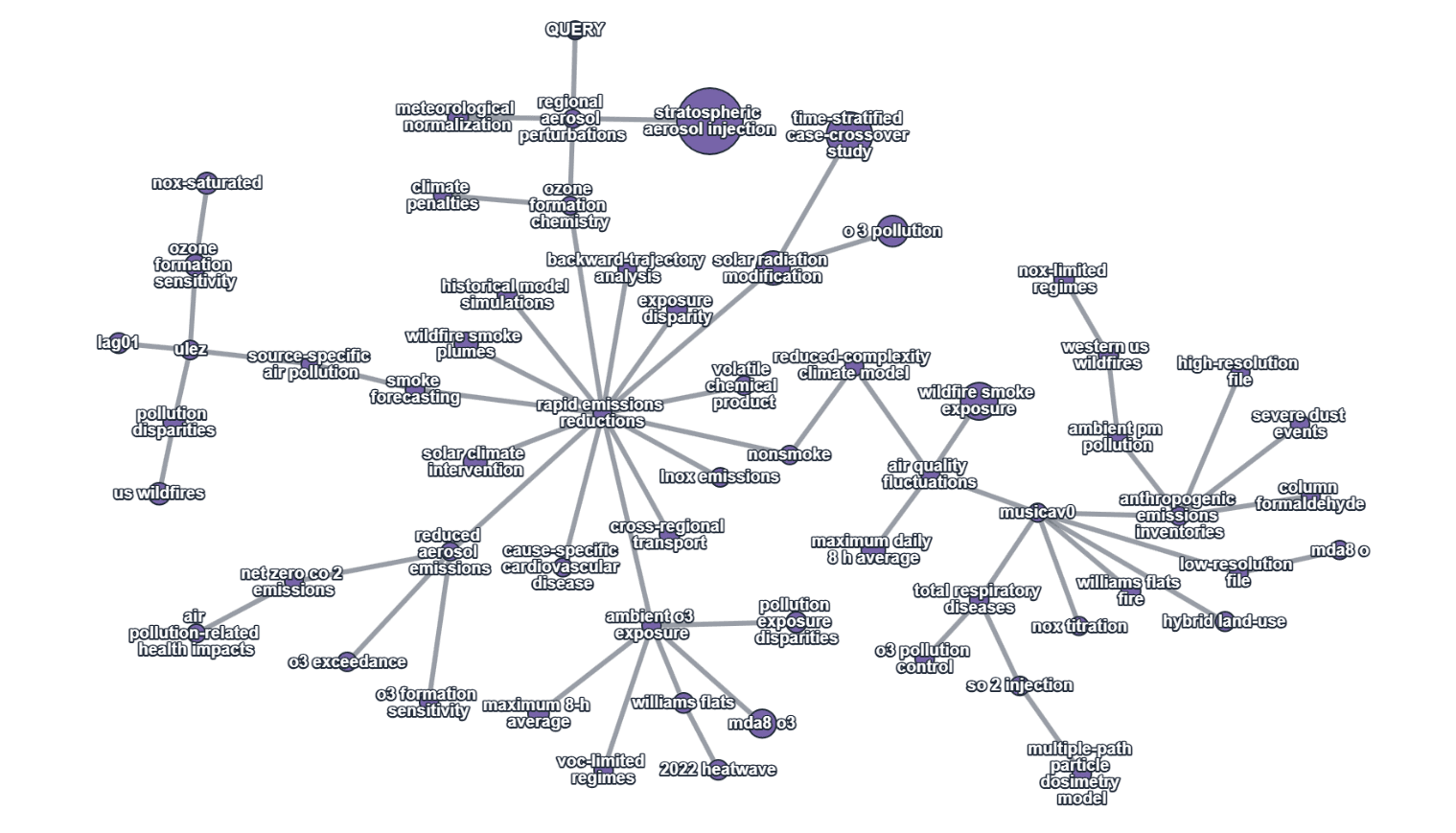
In a context of increasing complexity in climate knowledge, tools such as NeoPhi help structure and connect findings from the scientific literature. By relying on knowledge graphs, NeoPhi facilitates cross-cutting analyses of climate mechanisms, methodological uncertainties, and attribution results, thereby contributing to clearer insights for research and decision-making.
The European Union’s Commitment to Climate Resilience and Adaptation
In response to the intensification of climate risks, the European Union has developed coordinated research and funding strategies through the Horizon Europe framework.
Structuring Climate Research Through Horizon Europe
The Cluster 5 (Climate, Energy, Mobility) supports research on climate modeling, extreme event prediction, and energy transition.
The Cluster 3 (Civil Security for Society) focuses on disaster risk management and societal resilience.
Toward Systemic Climate Resilience
These initiatives aim to strengthen infrastructure resilience, improve crisis anticipation, and protect vulnerable populations.
Recent work (Sillmann et al., 2024) emphasizes the importance of integrating scientific knowledge into decision-making processes to enhance climate risk governance.
Conclusion: Toward Improved Global Climate Risk Management
The current scientific body of evidence robustly demonstrates that anthropogenic climate change intensifies intensifies floods, river overflows, heatwaves and storms. worldwide.
However, the complexity of climate interactions—particularly regarding compound events and land–atmosphere feedbacks—requires continued research efforts. Improving attribution methods, reducing model uncertainties, and strengthening observational capacities are essential to refine projections, support adaptation strategies, and mitigate socio-economic impacts. These findings provide an essential basis to consult, interpret and anticipate the climate risks that France is already facing.
FAQ – Climate Change and Extreme Weather Events
What is the direct link between climate change and extreme weather events?
Climate change alters the thermodynamic properties of the atmosphere. Warmer air holds more moisture, leading to more intense precipitation, while changes in atmospheric circulation increase the frequency and severity of heatwaves.
What is Extreme Event Attribution?
Extreme Event Attribution is a scientific method used to assess the extent to which human-induced climate change has influenced the likelihood or intensity of a specific weather event.
Why are some extreme events described as “compound”?
Compound events result from the interaction of multiple climate drivers, such as simultaneous heatwaves and droughts. Their impacts are amplified due to non-linear interactions and feedback mechanisms.
Why do climate models still contain uncertainties?
Uncertainties arise from the complexity of the climate system, differences in model structures and parameterizations, and limited data availability in certain regions.
How does the European Union support climate resilience research?
The EU funds climate research through the Horizon Europe program, supporting advancements in climate modeling, risk prediction, and adaptation strategies aimed at strengthening societal resilience.
Bibliography
[Brunner, L., & Voigt, A. (2024). Pitfalls in diagnosing temperature extremes (Vol. 15, pp. 97–99). ](https://doi.org/10.1038/s41467-024-46349-x )
[Clarke, B., Otto, F. E. L., & Jones, R. (2023). When don’t we need a new extreme event attribution study? (Vol. 176, p. Unknown Page).]( https://doi.org/10.1007/s10584-023-03521-4)
Otto, F. E. L. (2023). Attribution of Extreme Events to Climate Change (Vol. 48, pp. 813–828).
[Brunner, L., & Voigt, A. (2024). Pitfalls in diagnosing temperature extremes (Vol. 15, pp. 97–99). ](https://doi.org/10.1038/s41467-024-46349-x )
[Sillmann, J., Raupach, T., Findell, K. L., Donat, M. G., Alves, L. M., Alexander, L. V., Borchert, L., de Amorim, P. B., Buontempo, C., Fischer, E., Franzke, C., Guan, B., Haasnoot, M., Hawkins, E., Jacob, D., Mahon, R., Maraun, D., Morrison, M. A., Poschlod, B., … Županić, J. (2024). Climate extremes and risks: links between climate science and decision-making (Vol. 6, p. Unknown Page).]( https://doi.org/10.3389/fclim.2024.1499765)
[Yao, L., Leng, G., Yu, L., Tu, H., & Qiu, J. (2024). Observational constraint on climate model projections of global compound hot–dry events and the socioeconomic risks under climate change (Vol. 19, pp. 114027–114027). ](https://doi.org/10.1088/1748-9326/ad7f72 )