Health
Dietary supplements and ADHD : What does the scientific literature really say about omega-3s, saffron, and micronutrients?
On this page
By Christele Wawrzyniak, Grants Leader at F.initiatives and PhD in Biotechnology, Université Claude Bernard Lyon 1
This article takes a measured look at how dietary supplements fit into comprehensive care for attention-deficit/hyperactivity disorder (ADHD). Using recent peer-reviewed studies, it examines how far nutrition-focused strategies, often highlighted in public debate, can actually improve symptoms. It outlines plausible biological mechanisms linking diet to neurocognitive function and compares them with empirical findings.
Commonly discussed supplements—omega-3 fatty acids, saffron, and select micronutrients—are evaluated for both potential and limitations. The article also underscores wide individual variability and the need for careful interpretation to provide a balanced, evidence-informed view.
Research focus
In managing ADHD in children, medications such as methylphenidate are effective for symptom control. Interest is growing, however, in a systems approach that includes diet, physical activity, sleep, muscle tone, breathing, and posture. This piece focuses on diet.
Many supplements claim benefits for ADHD, but what does the literature actually show? What about saffron and omega-3s? And what are the limits of supplementation given individual differences?
Introduction
Attention-deficit/hyperactivity disorder (ADHD) is a neurodevelopmental condition marked by developmentally inappropriate inattention and/or hyperactivity-impulsivity, with an estimated global prevalence of about 7% in children and adolescents \[Michelle Silva Rocha et al., 2024\].
ADHD usually calls for multimodal care, often centered on pharmacotherapy such as methylphenidate. Interest in diet and supplements as adjunct strategies is rising. Current evidence examines how these nutritional interventions compare with standard treatments and identifies constraints tied to patient-specific factors.
Key questions in this review concern the strength of evidence for supplements like omega-3s and saffron, along with the methodological and clinical limitations that prevent broad, one-size-fits-all recommendations.
Biological rationale and dietary approaches in ADHD
The case for nutrition-based interventions rests on the idea that nutrient status can influence neurobiology, including neurotransmission, neuroinflammation, and synaptic function. Polyunsaturated fatty acids (PUFAs), especially omega-3s, are studied for roles in synaptic membrane structure and neurotransmitter activity \[Agnieszka Raczyńska et al., 2024\].
Omega-3 insufficiency has been observed in children with ADHD, and an imbalanced dietary omega-6 to omega-3 ratio has been associated with the disorder \[Sümeyye AKIN et al., 2022\]. Deficits in micronutrients such as iron, zinc, and magnesium correlate with symptom severity and treatment response \[Subhabrata Sarkar* et al., 2026\].
Magnesium is important for neurotransmitter regulation and synaptic plasticity \[Parinaz Kalejahi et al., 2025\]. Dietary patterns like the Mediterranean diet, rich in fruits, vegetables, and fiber, have been linked to lower risk of internalizing and externalizing problems, though ADHD-specific outcomes still need confirmation \[Maria Talib et al., 2024\].
Efficacy of specific supplements: omega-3s, saffron, and micronutrients
Findings differ across studies, but several consistent themes have emerged.
Omega-3s and polyunsaturated fatty acids (PUFAs)
Evidence for omega-3s is mixed. A meta-analysis reports low-certainty evidence that children receiving PUFAs may be more likely to improve versus placebo, but high-certainty evidence of no effect on parent-rated total symptoms \[Donna Gillies et al., 2023\].
An Israeli pilot study found that six months of omega-3 supplementation increased the red blood cell omega-3 index and reduced ADHD symptoms \[Uri Yatzkar et al., 2023\]. A randomized trial showed that a daily dose of 550 mg EPA and 225 mg DHA for eight weeks was associated with less impulsive behavior in children with ADHD \[Ismael San Mauro Martín et al., 2021\]. Other studies note non-significant or conflicting results and stress that nutritional approaches should not replace well-validated medications \[Shatha Al Shahab et al., 2025\].
Saffron and botanical extracts
Saffron (Crocus sativus) has gained attention as an alternative or add-on therapy. Four pilot studies suggest non-inferiority to methylphenidate and indicate that adding saffron may enhance methylphenidate’s effects \[Sigrun Chrubasik-Hausmann et al., 2023\]. A non-randomized clinical study found comparable overall efficacy, with saffron appearing more effective for hyperactivity and methylphenidate for inattention \[Hilario Blasco-Fontecilla et al., 2022\].
Another study reported that combining methylphenidate with saffron was more effective than either alone \[Mojtaba Khaksarian et al., 2021\]. Other botanicals, such as Bacopa monnieri, have been linked to reduced inattention and hyperactivity and to cognitive benefits, while Ginkgo biloba showed some reduction in inattention but was less effective than methylphenidate \[Shatha Al Shahab et al., 2025\].
Micronutrients (iron, zinc, magnesium)
Micronutrient supplementation appears most relevant for defined subgroups. A systematic review suggests that iron-zinc supplementation can support ADHD treatment in youth, particularly in specific subpopulations \[Roser Granero et al., 2021\].
Magnesium supplementation may help mitigate ADHD-related symptoms given its roles in the central nervous system \[Parinaz Kalejahi et al., 2025\]. Eight weeks of combined vitamin D and magnesium has been associated with improvements in behavior and mental health in children with ADHD \[Michelle Silva Rocha et al., 2024\].
Challenges, limitations, and individual variability in nutritional interventions
Despite encouraging signals, routine clinical use of these supplements is limited by evidence quality and substantial individual differences.
Evidence quality and study heterogeneity
Important methodological gaps remain. Current evidence is insufficient to justify strong, general dietary treatment recommendations \[Norman Therribout et al., 2022\]. Common issues include small sample sizes, heterogeneous inclusion criteria, wide variation in supplement types and doses, and short follow-up periods \[Donna Gillies et al., 2023\].
For some natural therapies, controlled trials have not established baseline efficacy, even if adverse events may be fewer than with evidence-based medications \[Courtney Zulauf et al., 2023\]. An umbrella review highlights the need to clarify causal links between dietary patterns and mental health risk, and calls for larger, well-designed randomized controlled trials to test the benefits of specific supplements \[Maria Talib et al., 2024\].
Individual differences and no universal recommendation
Efficacy likely depends on baseline nutrient status. Professional organizations generally do not recommend these interventions for the overall ADHD population without documented deficiencies \[Mona BOAZ et al., 2022\].
The MADDY randomized controlled trial reported that response to broad-spectrum micronutrients was independent of baseline diet quality, with higher intake of core vegetables possibly improving response \[Lisa M. Robinette et al., 2023\].
Overall, findings for dietary interventions remain limited, non-significant, or contradictory in many studies, and the number of high-quality trials is still modest \[Maria Talib et al., 2024\].
Safety and interactions with standard treatments
Although supplements often have favorable safety profiles, they do not substitute for the well-established efficacy of stimulants \[Shatha Al Shahab et al., 2025\]. Adverse effects of medications such as methylphenidate, including irritability, insomnia, and appetite suppression, are well documented, motivating interest in alternatives, but risks must be considered case by case \[Estefany Karinny Lima Amorim et al., 2021\].
The lack of clear practice guidelines hinders standardized use \[Matteo Chiappedi et al., 2021\]. Variation across trials, such as a French RCT favoring placebo versus a Mexican trial finding omega-3s comparable to methylphenidate, underscores the need for more rigorous studies to identify optimal doses and combinations \[Agnieszka Raczyńska et al., 2024\].
Conclusion and outlook
The current literature indicates that nutritional interventions, especially omega-3s, saffron, and selected micronutrients, hold therapeutic promise as adjuncts to conventional ADHD care. Effects are not universal and vary with individual profiles and product formulations.
While signals are promising for certain subgroups, the evidence base is limited by heterogeneous methods and small samples. A prudent approach is personalized use that considers potential deficiencies and individual response rather than standardized supplementation.
Future research should prioritize larger, longer randomized controlled trials with standardized protocols to confirm efficacy, clarify mechanisms, and map interactions with pharmacotherapy.
FAQ
What effects do omega-3s have on ADHD symptoms?
Omega-3s have been widely studied in clinical populations. Deficits in essential fatty acids are common in children with ADHD and may affect brain structure and neurotransmission. Results are mixed: meta-analyses advise caution about broad efficacy, but some trials suggest that targeted EPA and DHA may reduce impulsive behavior and improve attention in children. Nutritional strategies are adjunctive and do not replace standard medical treatment.
Is saffron an effective option for reducing hyperactivity?
Saffron is an emerging candidate in ADHD management. Multiple pilot trials indicate non-inferiority to methylphenidate overall. Early signals suggest saffron may be particularly helpful for hyperactivity and emotional regulation, while standard stimulants more strongly target inattention. Combining the two under medical supervision may improve overall outcomes.
Which micronutrients (iron, zinc, magnesium) act on the nervous system?
Mineral deficiencies often correlate with symptom burden. Magnesium plays key roles in central nervous system function and stress regulation; co-supplementation with vitamin D has been linked to improvements in behavior and mental health. Targeted repletion of iron and zinc can help select subgroups of children and support cognitive function. Laboratory assessment of these nutrients is a sensible step alongside a balanced diet.
Can dietary change help a child or adult with ADHD?
Adopting a Mediterranean-style pattern, rich in fruits, vegetables, fiber, and adequate protein, supports brain health. In susceptible individuals, diets high in certain additives and synthetic colorants may exacerbate agitation. Dietary optimization will not cure ADHD, but it can help stabilize the brain’s energy supply in both children and adults.
Do ADHD supplements have side effects on appetite, sleep, or the heart?
Unlike stimulants - which can sometimes suppress appetite, disrupt sleep, or affect heart rate—nutritional supplements generally have reassuring safety profiles. That said, the lack of standardized clinical guidelines limits broad, population-wide recommendations. A medical consultation is essential before starting supplements to confirm indications and screen for possible interactions.
Bibliography
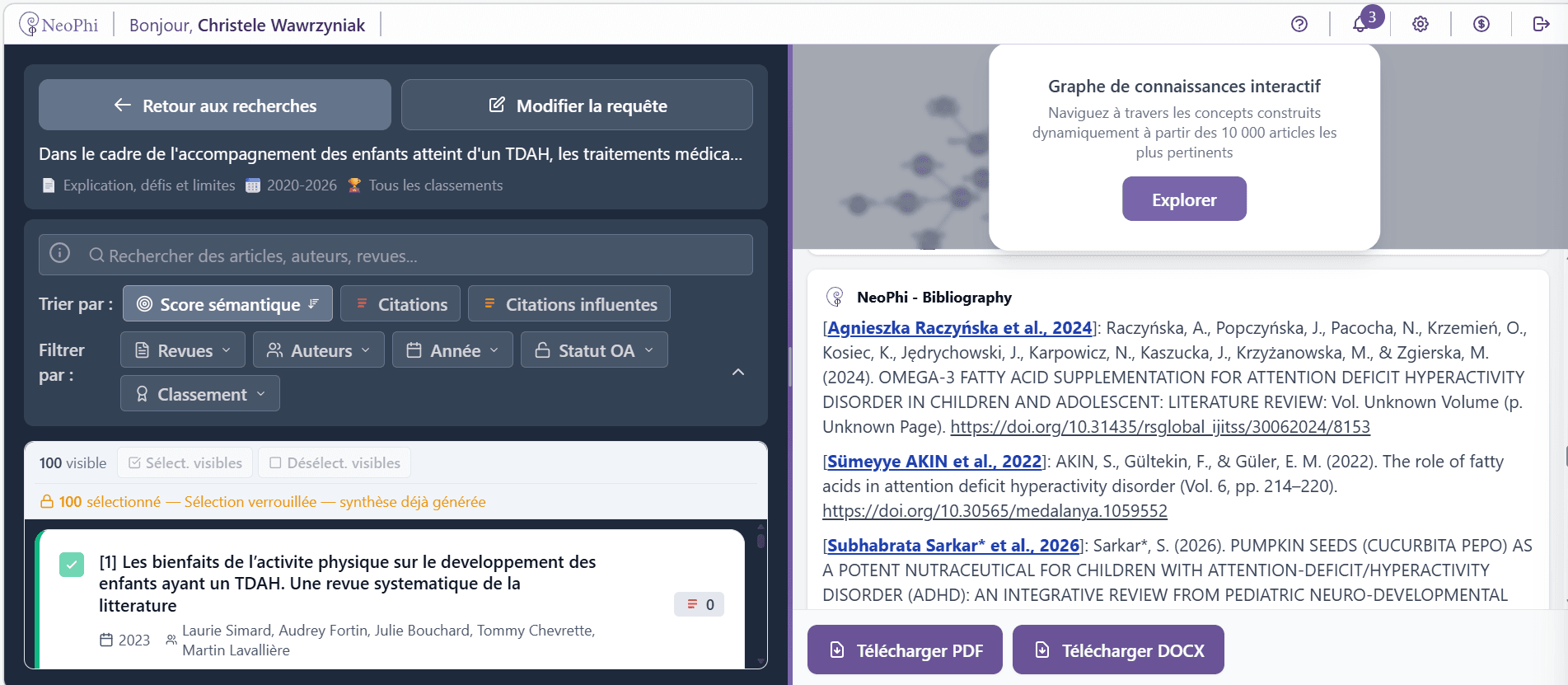
[\[Agnieszka Raczyńska et al., 2024\]: Raczyńska, A., Popczyńska, J., Pacocha, N., Krzemień, O., Kosiec, K., Jędrychowski, J., Karpowicz, N., Kaszucka, J., Krzyżanowska, M., & Zgierska, M. (2024). OMEGA-3 FATTY ACID SUPPLEMENTATION FOR ATTENTION DEFICIT HYPERACTIVITY DISORDER IN CHILDREN AND ADOLESCENT: LITERATURE REVIEW: Vol. Unknown Volume ](https://doi.org/10.31435/rsglobal_ijitss/30062024/8153 )
[\[Sümeyye AKIN et al., 2022\]: AKIN, S., Gültekin, F., & Güler, E. M. (2022). The role of fatty acids in attention deficit hyperactivity disorder (Vol. 6, pp. 214–220). ](https://doi.org/10.30565/medalanya.1059552 )
[\[Subhabrata Sarkar* et al., 2026\]: Sarkar*, S. (2026). PUMPKIN SEEDS (CUCURBITA PEPO) AS A POTENT NUTRACEUTICAL FOR CHILDREN WITH ATTENTION-DEFICIT/HYPERACTIVITY DISORDER (ADHD): AN INTEGRATIVE REVIEW FROM PEDIATRIC NEURO-DEVELOPMENTAL PERSPECTIVE: Vol. Unknown Volume ](https://doi.org/10.5281/zenodo.18875098 )
[\[Parinaz Kalejahi et al., 2025\]: Kalejahi, P., & Noorazar, S. G. (2025). Magnesium Status and Supplementation in Children With Attention-deficit/Hyperactivity Disorder: A Systematic Review (Vol. 13, pp. 183–192). ](https://doi.org/10.32598/jpr.13.3.1188.1 )
[\[Maria Talib et al., 2024\]: Talib, M., Rachdi, M., Papazova, A., & Nicolis, H. (2024). The Role of Dietary Patterns and Nutritional Supplements in the Management of Mental Disorders in Children and Adolescents: An Umbrella Review of Meta-Analyses: Le rôle des habitudes alimentaires et des suppléments nutritionnels dans la prise en charge des troubles mentaux chez les enfants et les adolescents : une méta-revue de méta-analyses (Vol. 69, pp. 567–589). ](https://doi.org/10.1177/07067437241248070 )
[\[Donna Gillies et al., 2023\]: Gillies, D., Leach, M., & Algorta, G. P. (2023). Polyunsaturated fatty acids (PUFA) for attention deficit hyperactivity disorder (ADHD) in children and adolescents (Vol. 2023, pp. CD007986–CD007986). ](https://doi.org/10.1002/14651858.cd007986.pub3 )
[\[Uri Yatzkar et al., 2023\]: Yatzkar, U., Amir, E., Tamir, S., & Armon-Omer, A. (2023). Omega-3 Fatty Acid Supplementation Improves AttentionDeficit-Hyperactivity Disorder Symptoms in Children (Vol. 20, pp. 48–58). ](https://doi.org/10.2174/2666082219666230103113402 )
[\[Ismael San Mauro Martín et al., 2021\]: Martín, I. S. M., Rojo, S. S., Cosano, L. G., de la Campa, R. C., Vilar, E. G., & Olivares, J. A. B. (2021). Impulsiveness in children with attention-deficit/hyperactivity disorder after an 8-week intervention with the Mediterranean diet and/or omega-3 fatty acids: a randomised clinical trial (Vol. 37, pp. 513–523). ](https://doi.org/10.1016/j.nrleng.2019.09.009 )
[\[Shatha Al Shahab et al., 2025\]: Shahab, S. A., Balushi, R. A., Qambar, A., Abdulla, R., Qader, M., Abdulla, S. S., & Jahrami, H. (2025). Efficiency of Different Supplements in Alleviating Symptoms of ADHD with or Without the Use of Stimulants: A Systematic Review (Vol. 17, pp. 1482–1482). ](https://doi.org/10.3390/nu17091482 )
[\[Sigrun Chrubasik‐Hausmann et al., 2023\]: Chrubasik‐Hausmann, S. (2023). Wirksamkeit von Safran beim Aufmerksamkeitsdefizit-/Hyperaktivitätssyndrom (ADHS) (Vol. 44, pp. 15–20).]( https://doi.org/10.1055/a-1924-9538 )
[\[Hilario Blasco‐Fontecilla et al., 2022\]: Blasco‐Fontecilla, H., Moyano-Ramírez, E., Méndez-González, O., Rodrigo-Yanguas, M., Martín-Moratinos, M., & Bella-Fernández, M. (2022). Effectivity of Saffron Extract (Saffr’Activ) on Treatment for Children and Adolescents with Attention Deficit/Hyperactivity Disorder (ADHD): A Clinical Effectivity Study (Vol. 14, pp. 4046–4046). ](https://doi.org/10.3390/nu14194046 )
[\[Mojtaba Khaksarian et al., 2021\]: Khaksarian, M., Ahangari, N., Masjedi‐Arani, A., Mirr, I., Jafari, H., Kordian, S., Nooripour, R., & Hassanvandi, S. (2021). A Comparison of Methylphenidate (MPH) and Combined Methylphenidate with Crocus sativus (Saffron) in the Treatment of Children and Adolescents with ADHD: A Randomized, Double-blind, Parallel-Group, Clinical Trial (Vol. 15, p. Unknown Page). ](https://doi.org/10.5812/ijpbs.108390 )
[\[Roser Granero et al., 2021\]: Granero, R., Pardo-Garrido, A., Carpio-Toro, I. L., Ramírez‐Coronel, A. A., Martínez-Suárez, P. C., & Ortiz, G. G. R. (2021). The Role of Iron and Zinc in the Treatment of ADHD among Children and Adolescents: A Systematic Review of Randomized Clinical Trials (Vol. 13, pp. 4059–4059). ](https://doi.org/10.3390/nu13114059 )
[\[Michelle Silva Rocha et al., 2024\]: Rocha, M. S., de Aquino, L. L., de Oliveira Gonçalves, G., Barbosa, S. M. V., de Freitas, J. L., Lopes, V. B., Dias, W. C., de Araújo Soares, R. N., de Cássia Oliveira, A. P., & de Carvalho, E. M. (2024). Major clinical implications of adequate nutrition in children and adolescents with attention-deficit/hyperactivity disorder: a concise systematic review (Vol. 17,). ](https://doi.org/10.54448/ijn24205 )
[\[Norman Therribout et al., 2022\]: Therribout, N., van Kernebeek, M. W., Vorspan, F., Crunelle, C. L., van den Brink, W., Özgen, H., Spijkerman, R., Noack, M., Holtmann, M., Schellekens, A., van de Glind, G., Hendriks, V. M., Dom, G., Moggi, F., Konstenius, M., Franck, J., Levin, F. R., Ramos‐Quiroga, J. A., Demetrovics, Z., … Romo, L. (2022). Consensus international sur le dépistage, le diagnostic et le traitement des adolescents avec un trouble du déficit de l’attention avec ou sans hyperactivité en cas de comorbidité avec des troubles de l’usage de substances (Vol. 71, pp. 25–34). ](https://doi.org/10.1016/j.neurenf.2022.11.004 )
[\[Courtney Zulauf et al., 2023\]: Zulauf, C., LaCount, P. A., Shelton, C. R., Morrow, A. S., Zhao, X., Russell, D., Sibley, M. H., & Arnold, L. E. (2023). Systematic Review and Meta-Analyses: Safety and Efficacy of Complementary and Alternative Treatments for Pediatric Attention-Deficit/Hyperactivity Disorder (Vol. 44, pp. e322–e332). ](https://doi.org/10.1097/dbp.0000000000001184 )
[\[Mona BOAZ et al., 2022\]: BOAZ, M., & Kaufman-Shriqui, V. (2022). Dietary influences in Attention Deficit/Hyperactivity Disorder: an evidence-based narrative review (Vol. 2, pp. 277–277). ](https://doi.org/10.31989/ffs.v2i12.992 )
[\[Lisa M. Robinette et al., 2023\]: Robinette, L. M., Hatsu, I., Johnstone, J. M., Bruton, A. M., Leung, B., & Arnold, L. E. (2023). Treatment response to supplemental nutrients for ADHD is independent of diet quality: the MADDY Study RCT (Vol. 27, pp. 319–328). ]( https://doi.org/10.1080/1028415x.2023.2191415 )
[\[Estefany Karinny Lima Amorim et al., 2021\]: Amorim, E. K. L., Da Silva, H. O., da Silva Mesquita, G., Santos, R. B. D., & de Almeida, A. C. G. (2021). Efeitos associados ao uso prolongado de metilfenidato para o tratamento de TDAH: uma revisão sistemática / Effects associated with long-term use of methylphenidate for the treatment of ADHD: a systematic review (Vol. 7, pp. 107160–107177). ](https://doi.org/10.34117/bjdv7n11-380 )
[\[Matteo Chiappedi et al., 2021\]: Chiappedi, M. (2021). Poly-Unsaturated Fatty Acids in ADHD and in Other Neuropsychiatric Conditions: A Multiple Case Presentation (Vol. 13, pp. 234–240). ](https://doi.org/10.3390/pediatric13020032 )